Learning with AIEducation quality
Reflecting on AI-deas for Learning: innovations in AI and education

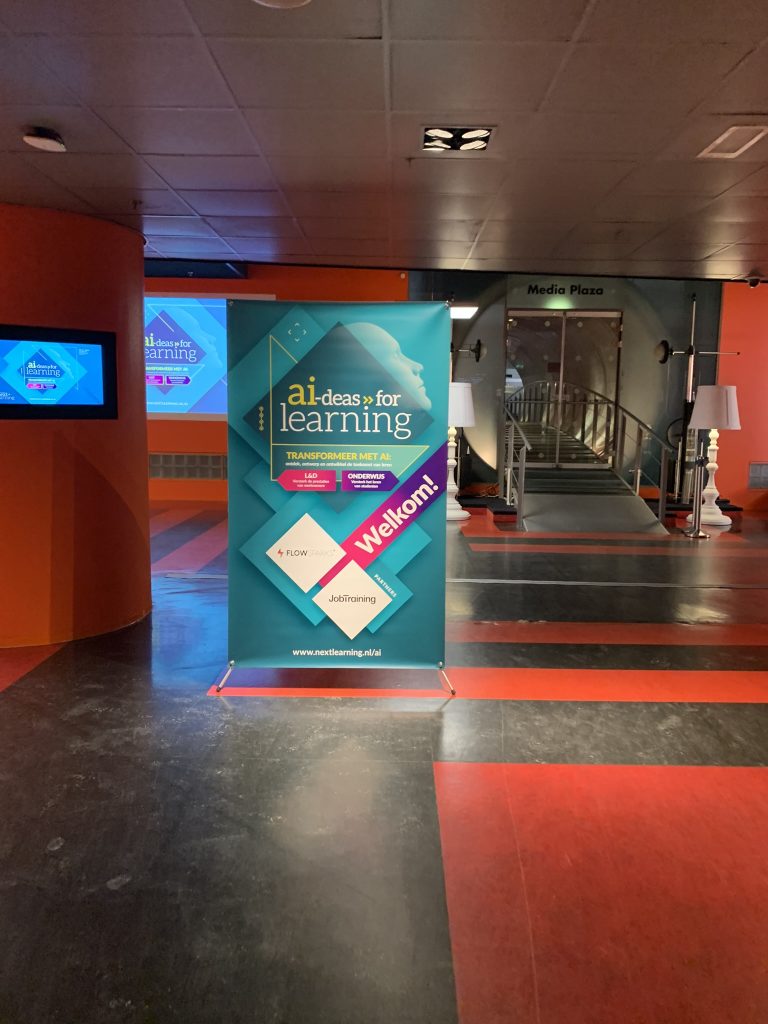
On 18 November 2024 I took part in AI-deas for Learning, an inspiring conference at Media Plaza Utrecht. The day was entirely devoted to AI applications in education and the ways in which this technology can contribute to learning, development and training. My session on the Feedback Companion and running AI locally attracted a lot of interest, and the conversations with other experts and participants made the day extra valuable.
Feedback Companion and running AI locally: the future of educational feedback
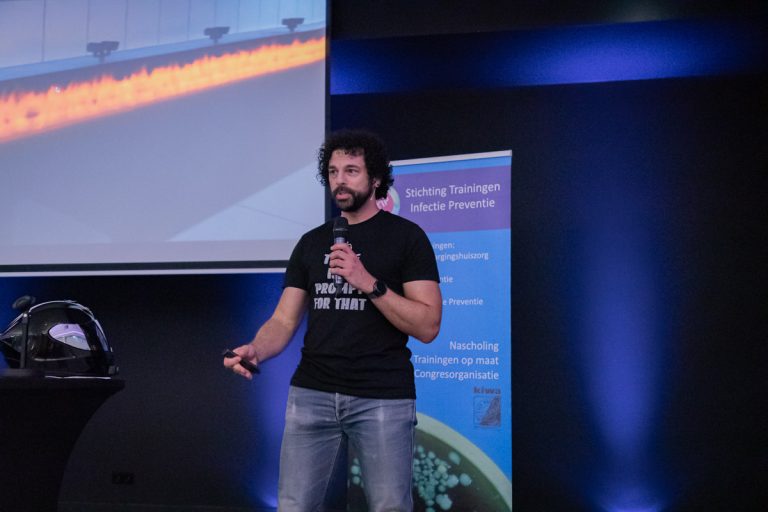
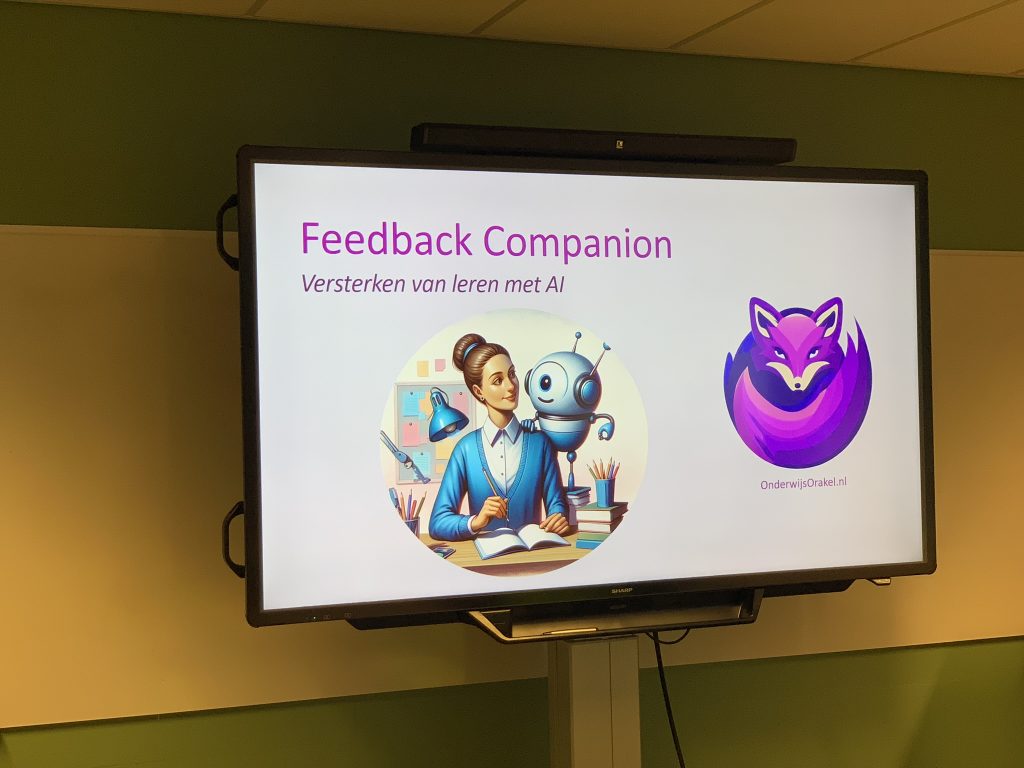
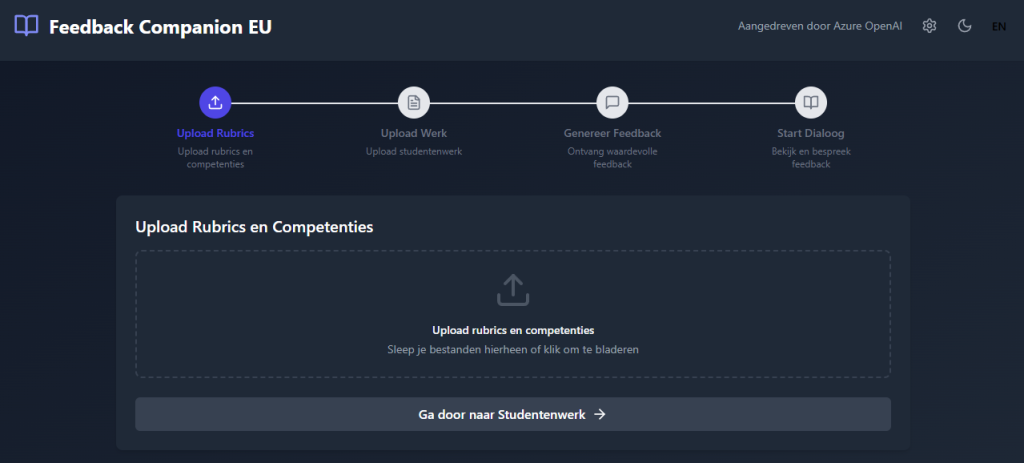
During my session in the GLOW room I took participants into the world of feedback and feedforward. At the centre was the Feedback Companion, an AI tool that supports lecturers and students in giving and interpreting feedback. This system works with rubrics, competencies and anonymised student work and provides structured feedback that is consistent, motivating and focused on growth.
The Feedback Companion: four steps to impactful feedback
The core of the Feedback Companion is based on the model by Hattie and Timperley (2007):
- Feed Up – Making clear what the student is working towards.
- Feedback – Reflection on performance and desired points for improvement.
- Feedforward – Clear next steps for growth and development.
This model strengthens feedback literacy, a crucial skill for students to understand, interpret and apply feedback.
GDPR-compliant thanks to Microsoft Azure AI servers within Europe
The Feedback Companion is currently being optimised to comply fully with the EU AI Act and the GDPR. This is done by using Microsoft Azure AI servers within Europe. This guarantees that data is processed securely and stays within European borders.
Thanks to my background in programming and my experience with my companies MARIANYDESIGN and MARIANYHOSTING, I am able to take on this technical challenge and develop the Feedback Companion further.
Call: looking for partners
However, I am still looking for partners to research the effectiveness of the tool further, particularly in the area of feedback literacy. Are you interested or would you like to contribute? Please feel free to get in touch!
Why also choose to run AI locally?
I made the case for using locally installed AI models, such as an LLM (Large Language Model) on your own laptop, to safeguard privacy and data management. This is fully in line with the guidelines of the EU AI Act and the GDPR. It enables educational institutions to innovate without depending on external servers.
More information about the Feedback Companion (including the Microsoft Azure version) and running AI locally can be found on my website: Feedback Companion.
Below you can download the presentation from my session at AI-deas For Learning:
Using AI for educational innovation
Besides my session, there were plenty of inspiring keynotes and workshops. Philippa Hardman, for example, stressed that AI should not only be used for efficiency, but above all as a means to fundamentally improve learning and training. Her call for a strategic AI mindset resonated widely: AI should not only save us time, but also make better learning experiences possible.
Learning from examples
Hardman gave examples of successful AI applications, such as the AI tutor “Sam” at Arizona State University, and AI assistants that monitor dropout risks. These are concrete illustrations of how AI can contribute to effectiveness rather than just efficiency.
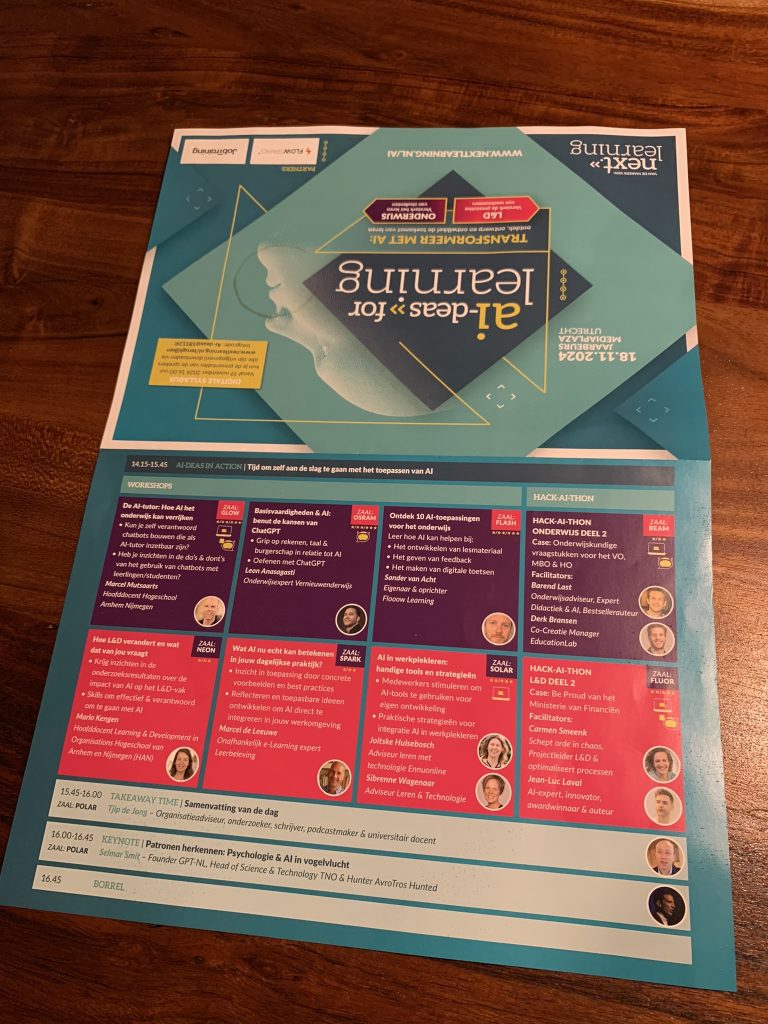
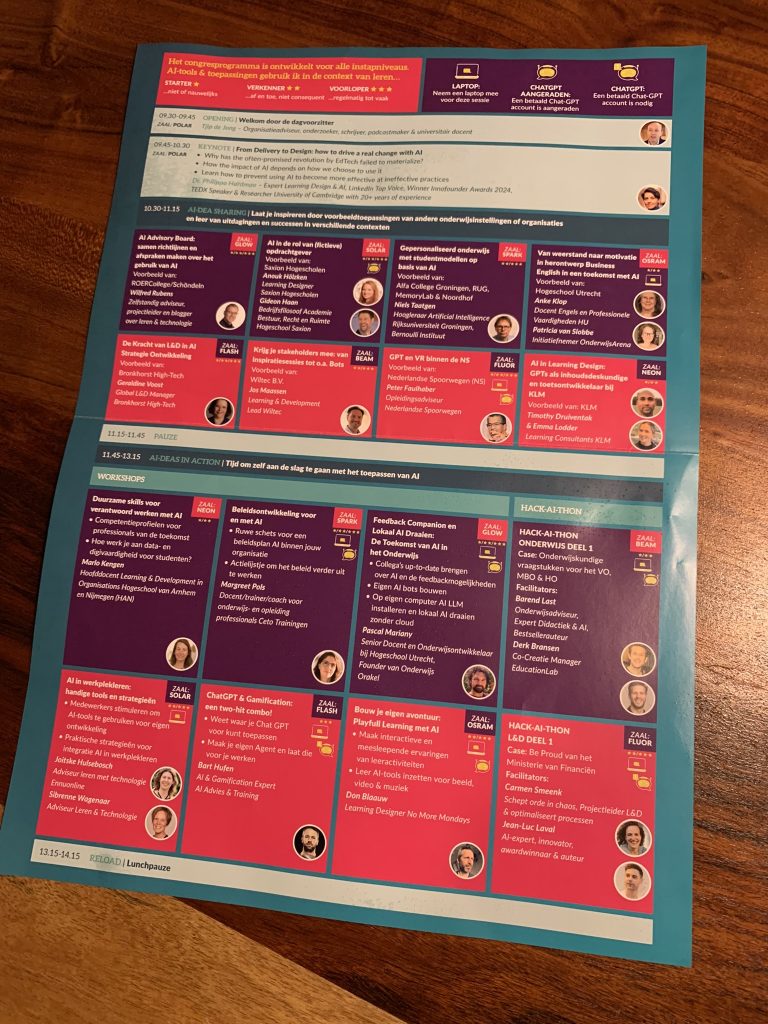
Hack-AI-thon with Barend Last and Derk Bransen
During the conference I also attended the session by Barend Last and Derk Bransen. Their insights into renewing traditional educational contexts and making use of AI and innovative didactic principles got me thinking about how we can fundamentally transform education. It made clear that technology should not just be a tool, but can be a driving force behind a more flexible and future-proof educational culture.
Reflection and inspiration
What struck me was the openness of the participants and the shared ambition to integrate AI responsibly into education. During my demonstration and discussion, questions came up about the balance between technology and human interaction, but also about the technical implementation of running AI locally.
It remains clear: the power of AI lies in how we use it. Tools such as the Feedback Companion show that AI can be a catalyst for better dialogue and collaboration, without compromising on privacy and data management.
Sources and links
- Hattie, J., & Timperley, H. (2007). The Power of Feedback. Review of Educational Research.
- Feedback Companion on Education Oracle
- Didactic Coaching training
- AI Workshops
I look back on this day with great pleasure and hope my contribution has inspired others to use AI in an innovative, effective and responsible way. Do you have questions or would you like to know more? Feel free to get in touch via Education Oracle.