Learning with AIEducation qualityResearch
Graduating with AI: From detection to dialogue

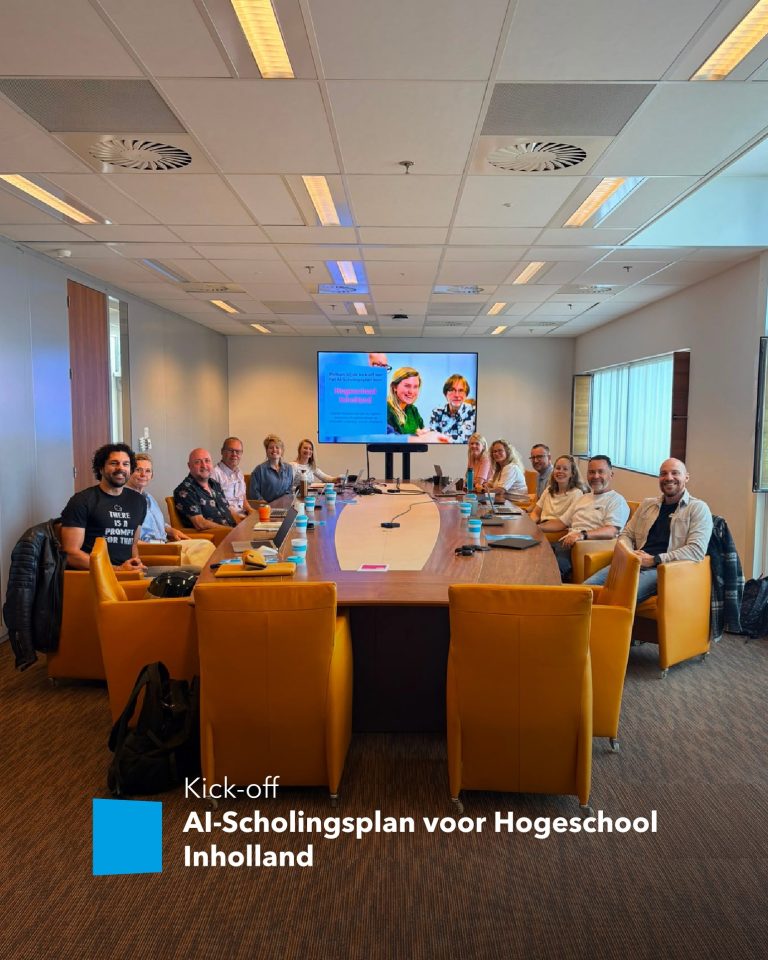
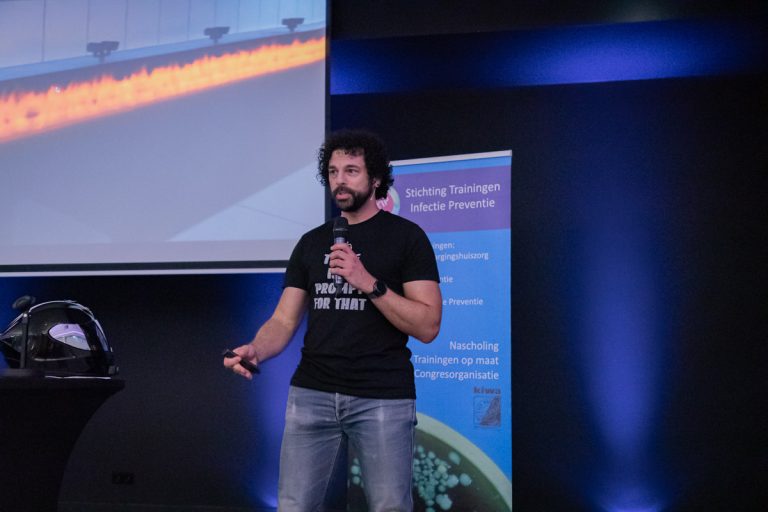
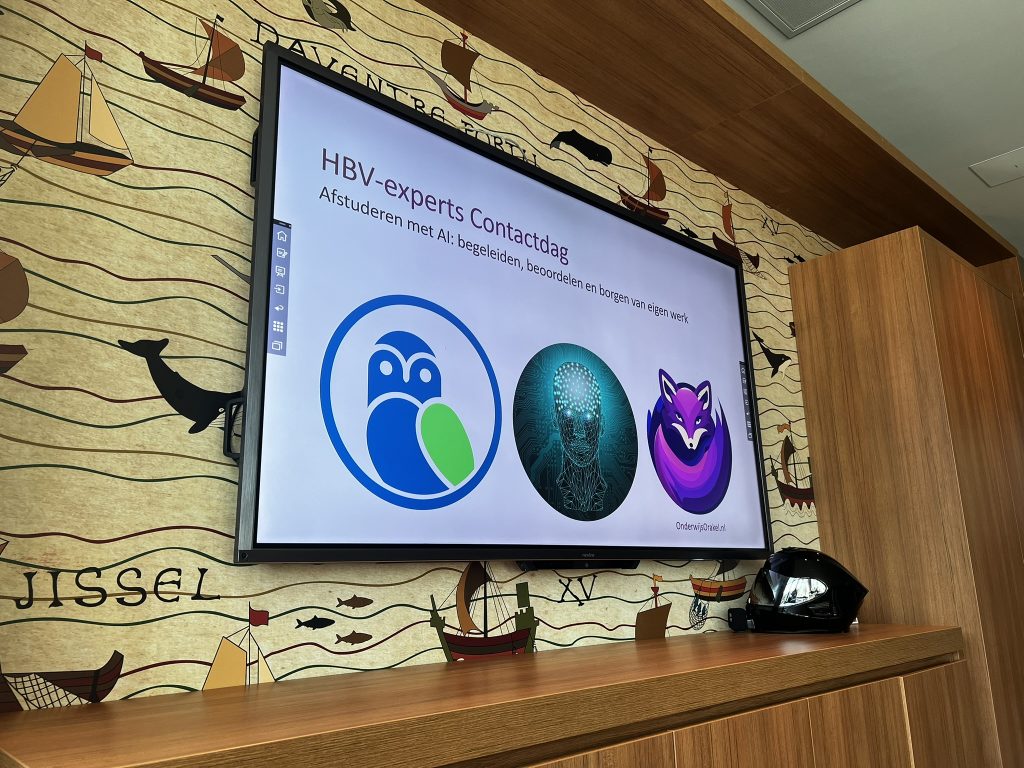
Over the past few weeks I have had the pleasure of running training sessions at various schools, universities of applied sciences and academies on a theme that is becoming ever more urgent: how do you supervise and assess students who use AI in their graduation work? It turns out to be a topic that not only raises questions, but also offers opportunities to make our education more future-proof. This time, a report on the training at HBV-experts. They represent a group of professionals (senior experts), mostly aged 60 and over. HBV does not want this knowledge, experience and expertise to be lost, and puts it to work for higher professional education (HBO), businesses, institutions and organisations.
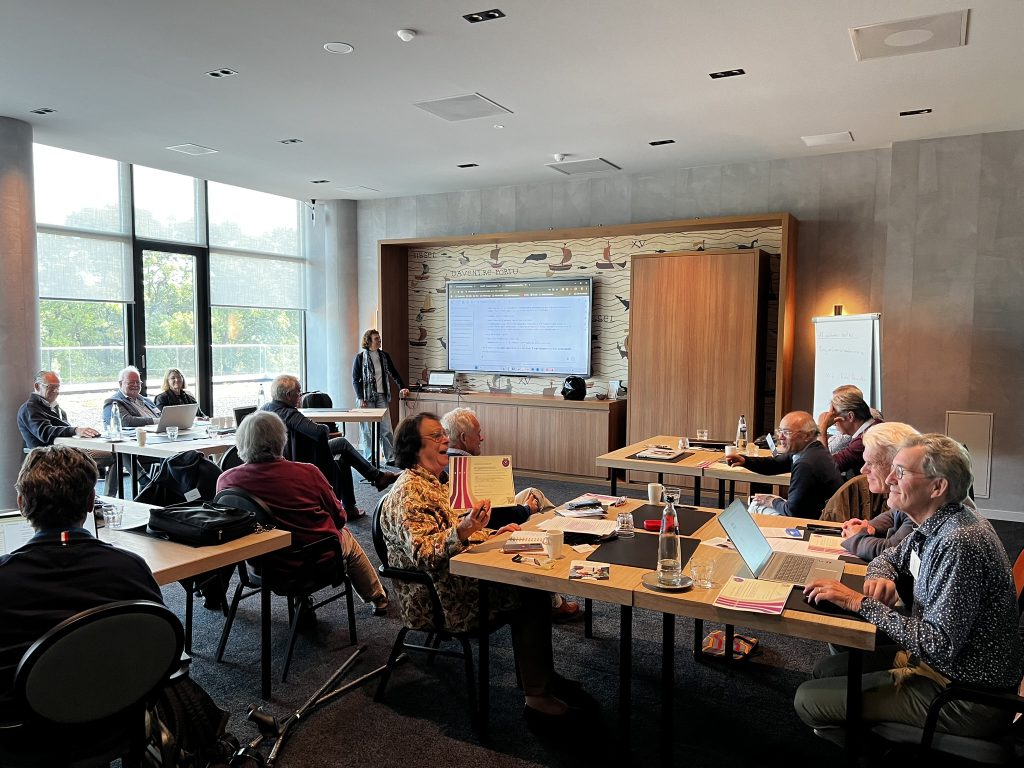
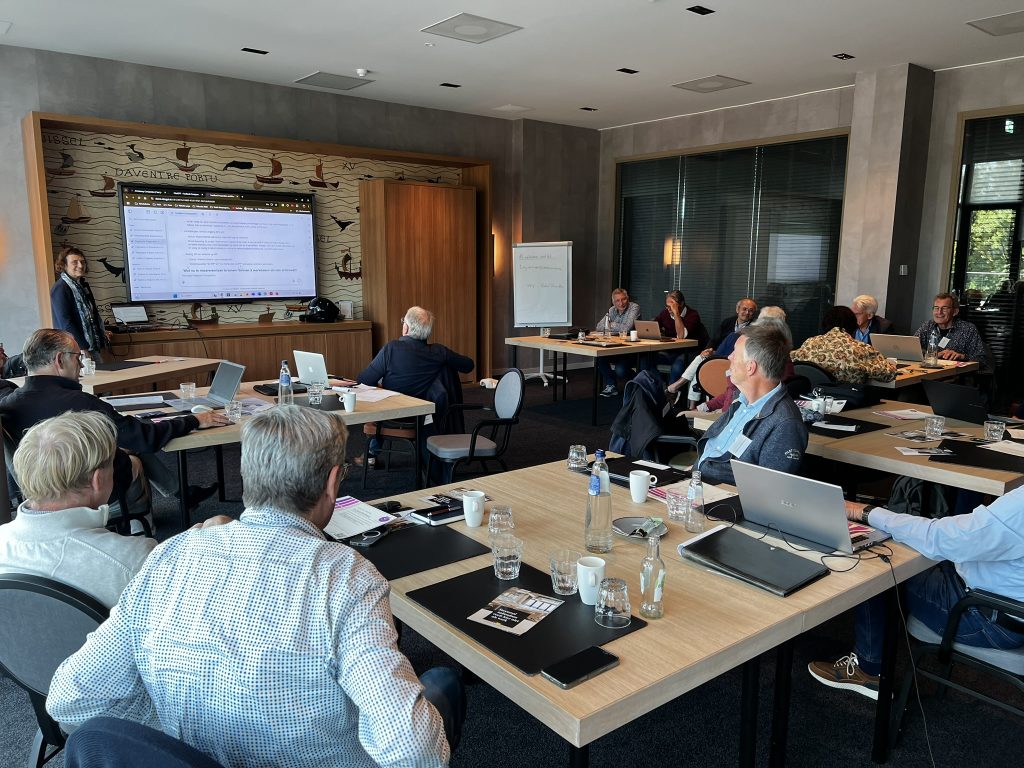
From distrust to awareness
Whereas AI is often still seen as something that needs to be “detected”, at its core it is really about transparency and reflection. In the session we challenged lecturers to have the conversation:
- How did you use AI?
- What did you do with it, and what did you deliberately not do?
- What did you learn from it?
As soon as students share their prompts, versions and choices, AI use changes from a risk into a learning moment. The focus shifts from control to ownership.
Tools for responsible AI use
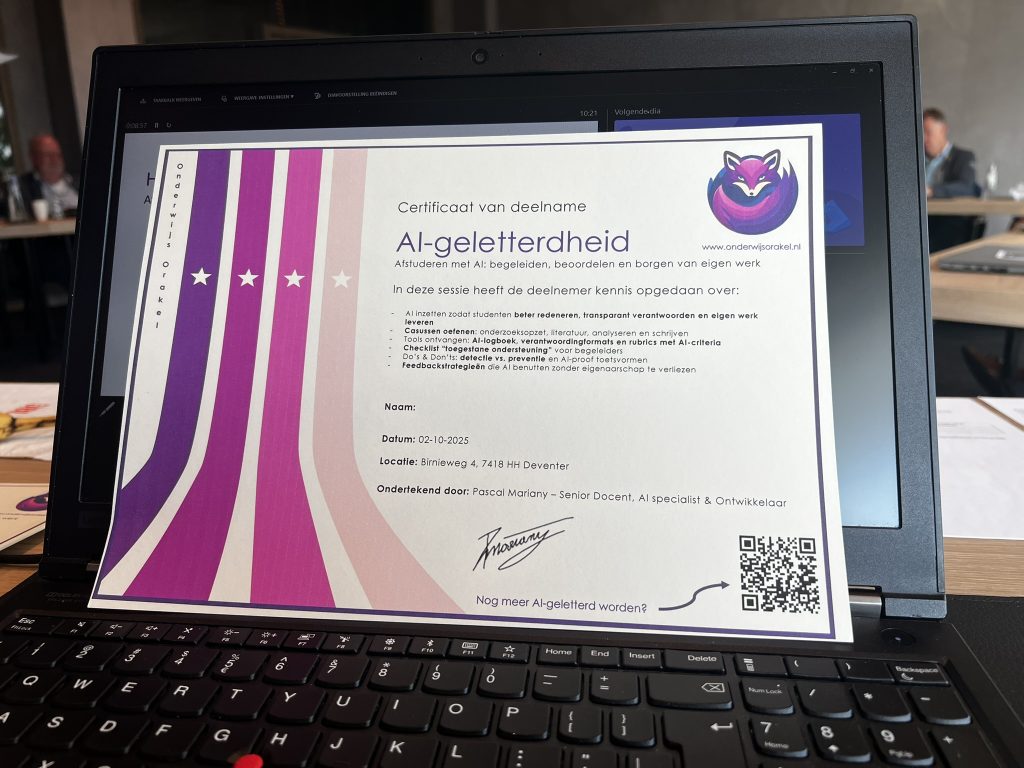
During the training, participants received a complete AI Graduation Toolkit, developed by Education Oracle. It includes:
- AI logbook – in which students document their use.
- Accountability template – as an appendix to the graduation work.
- Rubric with AI criteria – which supervisors can use to assess transparency and critical thinking.
- “AI as a companion” checklist – for supervision conversations about the role of AI.
Together, these tools form a practical framework for not banning AI, but using it consciously and in an assessable way.
AI Act, GDPR and teaching practice
An important part of the session was the AI Act and its consequences for educational institutions.
From 2025, AI in education counts as a high-risk domain: transparency, human oversight and secure data storage are mandatory. That calls for deliberate choices:
- Which AI tools do we use, and why?
- Where is pupil and student data processed?
- How do we safeguard human control?
That is why I work with platforms such as EduGPT, hosted entirely within the EU, with attention to privacy, security, data independence and pedagogical quality, which also supports critical thinking.
From appendix to awareness
What strikes me every time: as soon as students fill in their AI logbook, a deeper conversation emerges about learning, thinking and making choices. AI is then no longer a black box, but a mirror for reflection.
“Graduating with AI doesn't call for new rules, but for a new conversation about ownership and growth.”
The next step
This workshop is part of the broader programme Level Up: AI literacy for education. Would you also like to get started with AI accountability, rubrics or supervision pathways in your own programme? Then take a look at onderwijsorakel.nl/workshops or get in touch for a tailor-made inspiration session.