GamificationLearning with AIEducation quality
Vibecoding at TechNova: not talking about AI, but building with AI

Sometimes you feel it the moment you walk into a room.
No wait-and-see attitude. No “let’s see what this turns into”.
But energy.
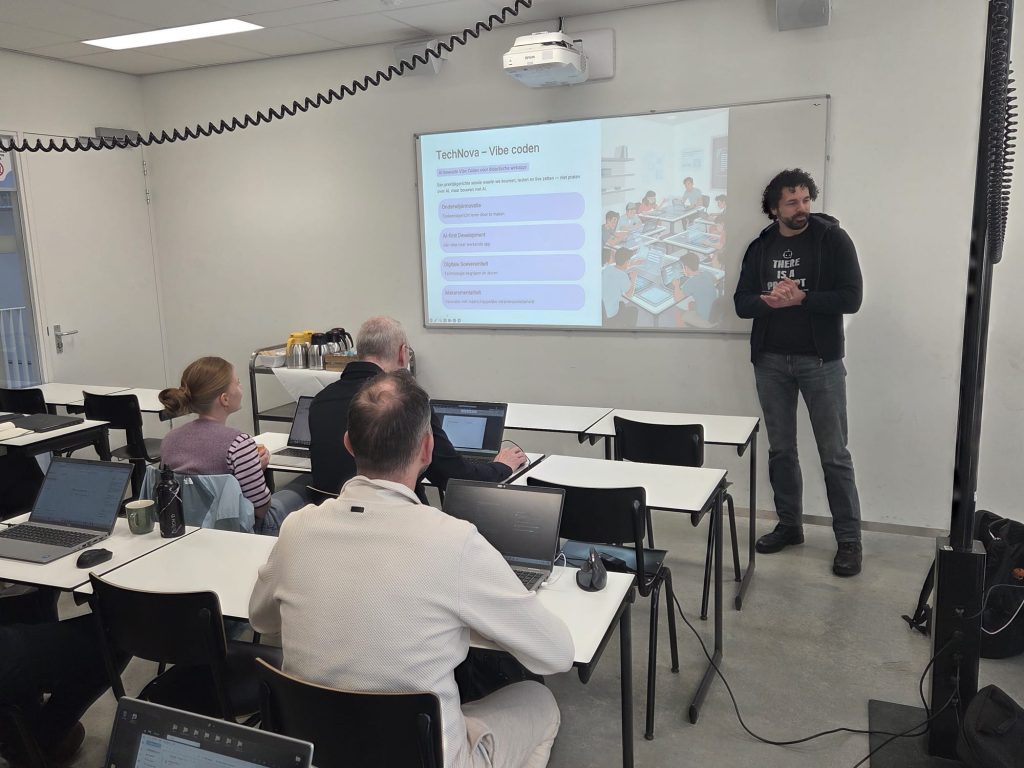
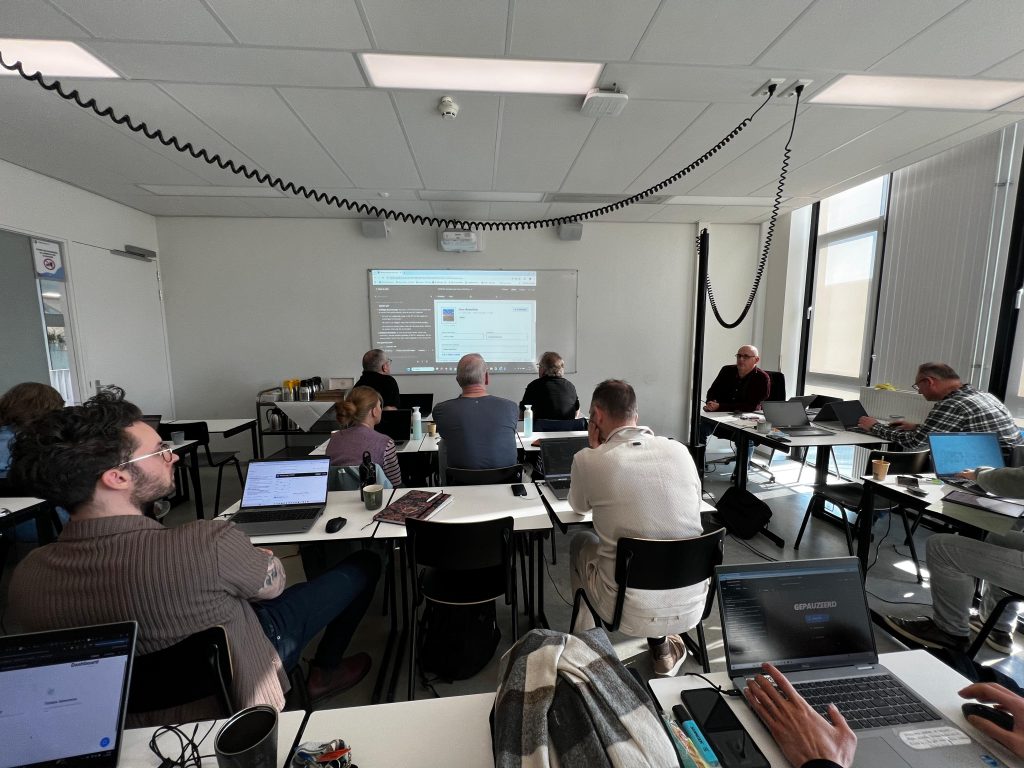
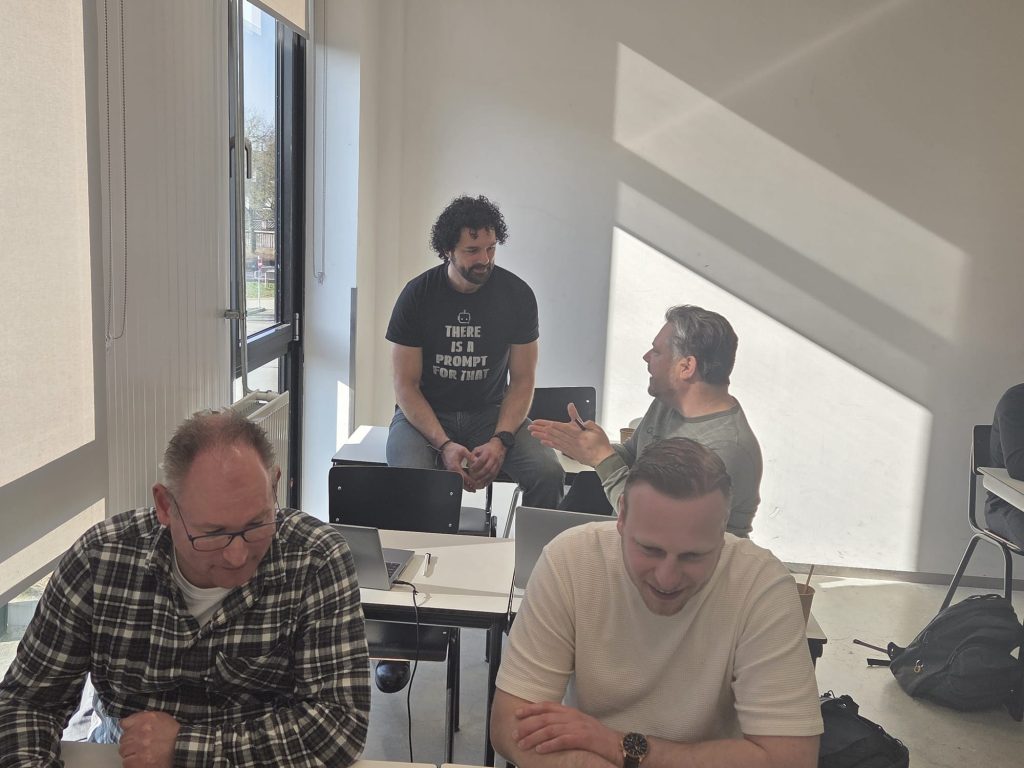
That is how the Vibecoding training day at TechNova began. No theoretical exploration of AI. No policy abstractions. But a working day. A building day.
A day on which education professionals decided not to follow technology, but to steer it.
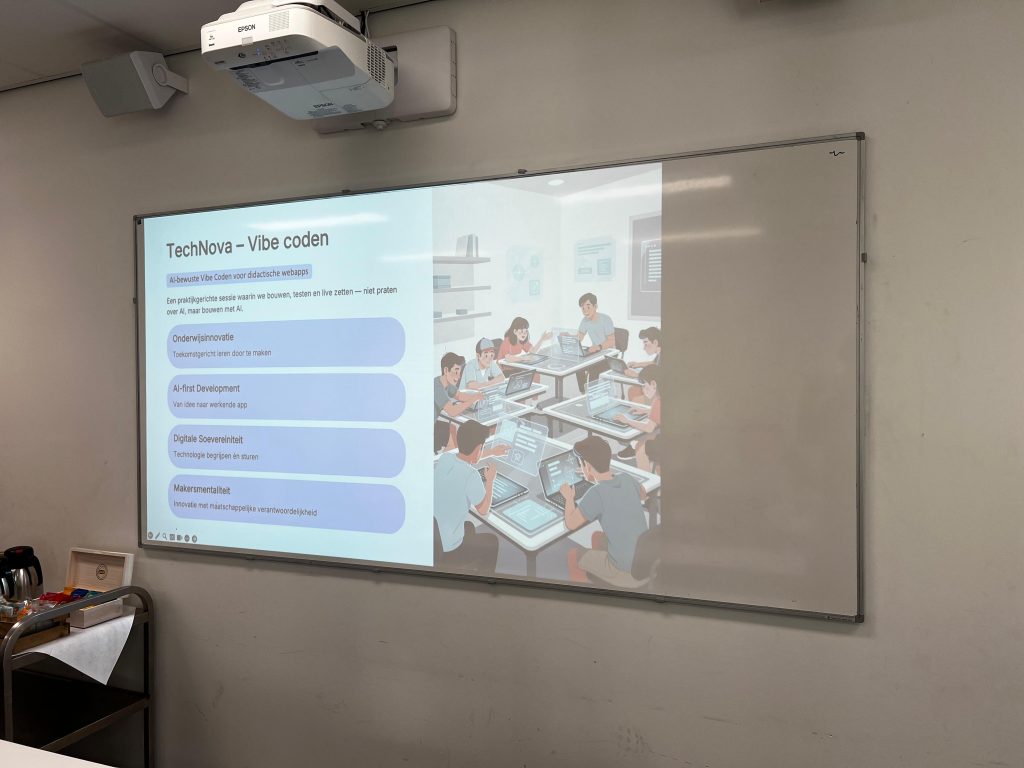
Start: frameworks and direction
We began the morning by sharpening our purpose.
What does AI-first development mean in education?
Not that AI takes over the work.
But that as a teacher you can move faster from idea to working tool.
We talked about a maker mindset. About digital sovereignty. About how to understand technology rather than consume it.
The core question was simple:
Do you build something because it is technically possible?
Or because it strengthens something didactically?
That conversation immediately set the tone.
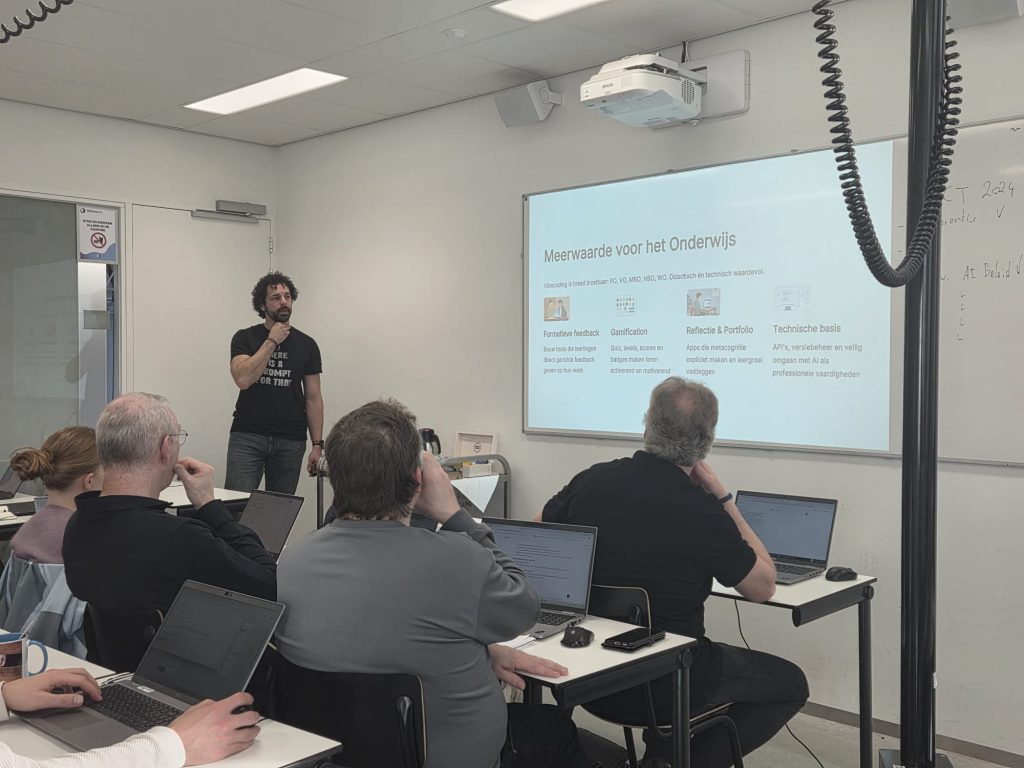
Added value for education: first the lesson, then the code
Before anyone had seen a single line of code, we zoomed in on learning value.
Each participant chose an educational context. No generic demos, but real issues from their own practice.
We worked with three assessment criteria:
- What is the concrete learning goal?
- What does it demonstrably deliver for the student?
- Does the tool strengthen thinking, or only speed?
The difference became tangible.
A quiz is not automatically didactically valuable.
A gamification element is not automatically motivating.
But a tool that forces students to reason, reflect or substantiate better? That is impact.
Tooling & workflow: from prompt to product
Then it got practical.
We discussed the basics of the stack:
Framework.
GitHub for version control.
Vercel or Netlify for deployment.
But the real turning point lay elsewhere: vibe prompting.
Not “write a text”, but:
Design a product.
Participants learned to formulate their prompt as a design document:
- Target group
- Functionality
- UX requirements
- Technical preconditions
- Ready for hosting
That changed everything.
The prompt set the direction. Intention took the lead.
Before lunch: first working version
And then what makes Vibecoding so powerful happened.
Within a few hours, the first working prototypes were up.
Quizzes with immediate feedback.
Timelines that make thinking processes explicit.
A drawing and maths tool.
Games with levels that only continue when the reasoning is correct.
Not perfect.
But working.
And that builds confidence.
Afternoon: making what you build professional
After lunch the focus shifted.
Now it was about professionalisation.
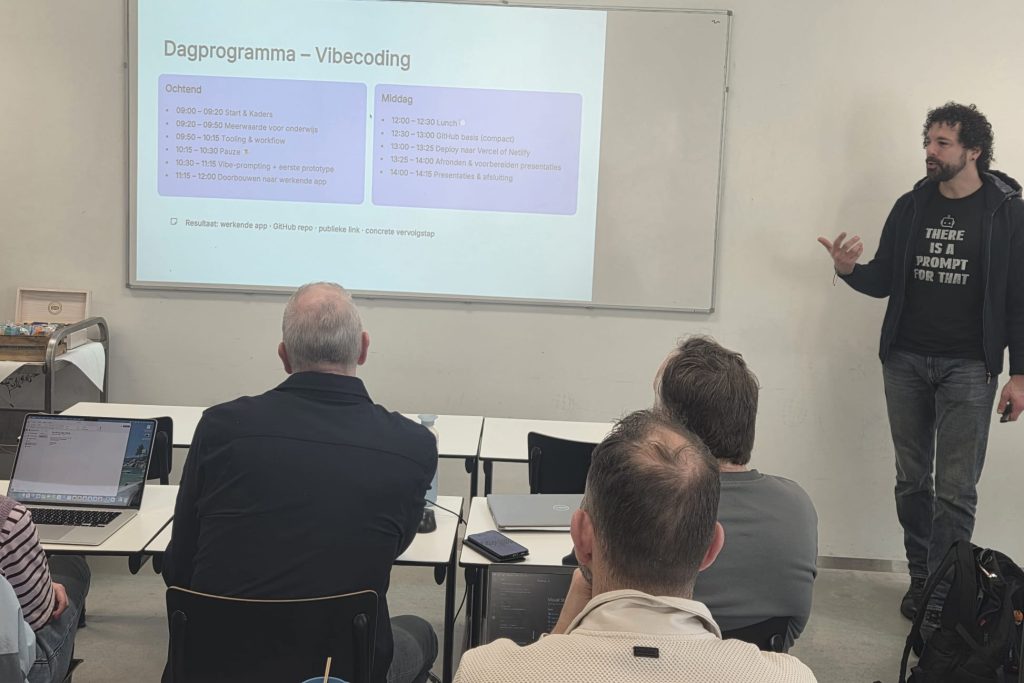
We created GitHub repositories.
We committed changes with clear messages.
We pushed to the cloud.
Version control became not a technical extra, but a safety net.
Then came deployment. The step that often gets left undone.
From prototype to public link.
From local experiment to stable URL.
That moment, when someone sees their own tool go live, remains special.
That is no longer an exercise.
That is ownership.
APIs and responsibility
For the faster participants there was Route Plus.
API connections.
Environment variables.
Cost management.
Handling keys safely.
Because AI literacy also means understanding how to deploy safely.
Never put API keys in your code.
Use environment variables.
Set limits.
Monitor actively.
Technology and responsibility go hand in hand.
What this day really showed
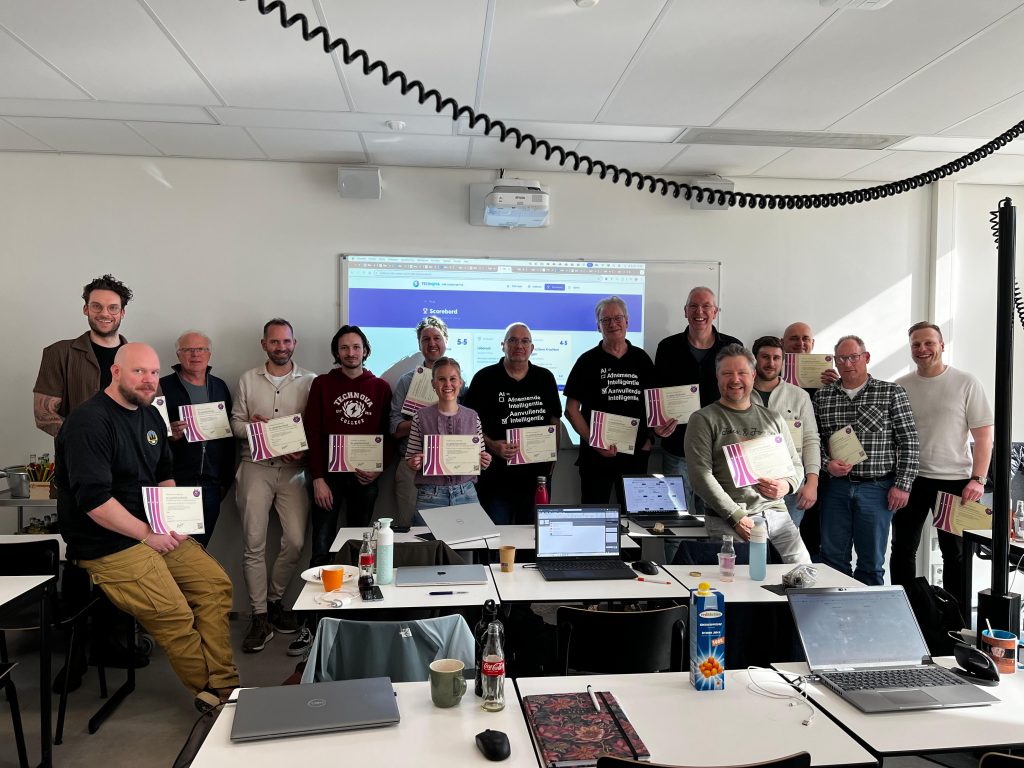
By the end of the day, everyone had:
- A working app
- A GitHub repository
- A public link
- A concrete next step for use in education
But more important than that:
They had experienced that they can do it themselves.
Not dependent on big platforms.
Not waiting for external software.
But building tools themselves that fit their didactic vision exactly.
The real measure of success
I closed with one question:
Which tool will be live in your teaching next week?
That is the difference between inspiration and implementation.
TechNova showed that innovation does not start with policy.
It starts with building.
And building is understanding.
Understanding is control.
Thanks to all participants for the energy, the courage and the willingness not just to use technology, but to truly get to the bottom of it.